

(Fr.Dr. Thomas M. Kottoor)
As Kerala’s population ages and the number of people living with terminal illnesses increases, palliative care is receiving growing attention. This is a welcome development in our healthcare system. Medical care is gradually moving beyond a predominantly curative approach towards a more holistic model that recognises the physical, psychological, emotional, social and spiritual needs of patients. The focus is no longer merely on prolonging life, but also on improving the quality of life, preserving human dignity and ensuring comfort during its final stages.
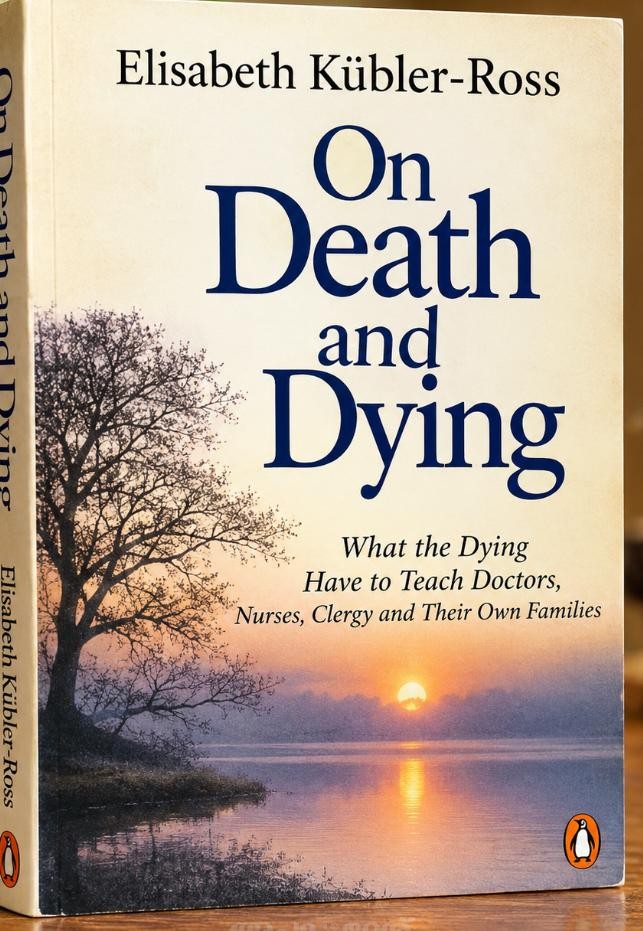
In this context, one pioneering book deserves renewed attention: On Death and Dying (1969) by Dr. Elisabeth Kübler-Ross. Widely recognised as a landmark in psychology, medical ethics and thanatology, the scientific study of death and dying, this book remains remarkably relevant even after more than five decades. In my opinion, it is essential reading for healthcare professionals, counsellors, caregivers, clergy and ministers of all denominations who accompany people through the final journey of life.
Breaking the Silence Around Death
Before Kübler-Ross published this groundbreaking work, death was, to a considerable extent, a medical and social taboo in Western society. Terminally ill patients were often isolated from difficult conversations, shielded from the truth about their diagnoses and treated primarily as medical cases. Healthcare systems, largely preoccupied with curing diseases and prolonging life, had little room for conversations about the emotional and existential experiences of dying.
Kübler-Ross challenged this prevailing attitude by doing something both simple and revolutionary: she listened.
Drawing on hundreds of interviews with terminally ill patients at the University of Chicago, she brought their voices, fears, hopes and unanswered questions into the centre of medical and psychological discourse. She recognised that dying individuals needed much more than medication and clinical attention. They needed empathy, honest communication, dignity and, above all, someone willing to listen without fear or judgement.
Her central message was deeply humanistic: even when a disease can no longer be cured, the person suffering from it must never be abandoned. The end of medical treatment does not mean the end of care.
The Five Stages of Grief: Understanding the Dying Process
One of the most widely known contributions of the book is the Five Stages Framework, popularly represented by the acronym DABDA. It describes some of the emotional responses that individuals may experience when confronted with a terminal diagnosis.
1. Denial and Isolation
Denial often serves as an initial psychological defence against overwhelming news. The individual may find it difficult to accept the diagnosis and respond with thoughts such as, “No, this cannot be happening to me.” This temporary emotional buffer gives the mind some time to absorb a painful reality.
2. Anger
As the reality of the illness becomes more difficult to avoid, anger may emerge. The patient may feel frustrated, resentful or unfairly treated by life. Anger may be directed towards family members, doctors, God or even the world at large. The familiar question is, “Why me?” Caregivers need to understand that such anger is often an expression of fear, helplessness and emotional pain rather than a personal rejection.
3. Bargaining
At this stage, individuals may attempt to negotiate for more time or a reprieve from their suffering. They may make promises to God, renew religious commitments or express a desire to live long enough to witness an important family event. “If only I could live to see my child graduate” is a typical expression of this longing. Bargaining reflects the human desire to retain some control when life appears increasingly uncertain.
4. Depression
As the patient begins to recognise the extent of the losses associated with terminal illness, profound sadness may develop. Kübler-Ross describes two dimensions of this experience.
Reactive depression:
Grief arising from losses already experienced or anticipated, such as employment, independence, physical abilities, financial security and familiar relationships.
Preparatory depression:
A deeper emotional response associated with preparing for impending separation from life and loved ones.
This distinction reminds caregivers that sadness is not necessarily something to be corrected or suppressed. Sometimes, the most compassionate response is simply to remain present.
5. Acceptance
Acceptance represents a gradual coming to terms with the reality of impending death. It does not necessarily mean happiness, resignation or the absence of sadness. Rather, it may involve a quiet sense of peace, emotional reconciliation and a readiness to approach life’s final chapter with dignity.
It is important to understand that these stages are not a rigid sequence through which every dying person must pass. They are possible emotional responses, not a psychological checklist.
Listening: The Most Powerful Form of Care
One of the remarkable features of On Death and Dying is its human-centred approach. Rather than presenting abstract medical theories alone, Kübler-Ross includes extensive accounts of conversations with terminally ill patients. Their own words and experiences form the heart of the book.
At a time when medical professionals often found it difficult to discuss death openly, she demonstrated the therapeutic power of listening. She showed that patients should not be reduced to their diagnoses or treated merely as bodies requiring medical intervention. They are individuals with personal histories, relationships, unfinished dreams, fears and spiritual concerns.
The book also pays attention to the emotional experiences of family members and healthcare providers. Those who care for the dying have their own anxieties, anticipatory grief and feelings of helplessness. Kübler-Ross emphasises the importance of honesty, patience and emotional availability. Caregivers need not manufacture optimism or offer unrealistic assurances. Their willingness to stay, listen and share the difficult moments can itself become a profound expression of love.
Hope: A Light That Continues to Shine
An especially significant aspect of Kübler-Ross’s work is her understanding of hope. Hope does not necessarily disappear when the possibility of recovery becomes remote. It may change its form.
A patient may initially hope for a cure. Later, the hope may be for a pain-free day, a family gathering, an opportunity to settle unfinished matters or simply a peaceful night. Even when death is approaching, hope can remain meaningful.
This insight is particularly relevant to palliative care. The purpose is not to extinguish hope by announcing that nothing more can be done. Rather, it is to help patients discover what remains possible and meaningful in the time available to them.
A Scientific Perspective:
Understanding the Limitations
Although the influence of Kübler-Ross’s work is undeniable, contemporary psychology offers some important qualifications.
The most common misunderstanding concerns the linear interpretation of the five stages. They are frequently presented as a fixed sequence, as though every individual must move from denial through anger, bargaining and depression before reaching acceptance. Kübler-Ross herself did not intend such a rigid interpretation. These responses may overlap, recur, occur in a different order or be absent altogether. Every person’s experience of dying is unique.
Another important distinction concerns the application of the model to bereavement. Kübler-Ross originally developed her observations around people confronting their own terminal illnesses. Over time, the five stages became widely associated with grief arising from the death of a loved one, relationship breakdowns, job losses and other significant life changes. Although some of the emotional responses may be relevant in these situations, bereavement and the experience of facing one’s own mortality are not identical psychological processes.
From the perspective of contemporary scientific research, her original methodology was primarily qualitative and observational rather than based on controlled empirical studies. The framework should therefore be understood as an influential descriptive model, not a universally validated psychological theory or diagnostic tool.
These limitations do not diminish the historical and human significance of her contribution. They simply remind us to approach each patient as an individual rather than trying to fit human suffering into predetermined categories.
Who Should Read This Book?
On Death and Dying is particularly valuable for doctors, nurses, psychologists, counsellors, hospice and palliative care professionals, social workers, clergy and family members caring for someone with a terminal illness. It is also relevant to anyone who wishes to understand human mortality with greater sensitivity and compassion.
For ministers and spiritual caregivers, the book offers an especially important lesson. Spiritual accompaniment at the end of life is not merely about offering prayers, religious explanations or assurances of an afterlife. It is also about respecting the person’s fears, listening to difficult questions, offering companionship and helping individuals find meaning, reconciliation and peace.
Beyond Dying: A Lesson in Living
Elisabeth Kübler-Ross’s On Death and Dying fundamentally changed the way modern medicine and society understand terminal illness. Her work helped shape the development of hospice and palliative care movements by bringing the emotional and human dimensions of dying into healthcare conversations.
Perhaps the greatest lesson of the book is that although death may mark the end of medical possibilities, it need not mark the end of human possibilities. There is still room for love, reconciliation, meaningful conversations, spiritual reflection and the restoration of dignity.
Palliative care, therefore, is not simply about helping someone die comfortably. It is about helping someone live meaningfully until the very end.
The journey towards life’s end is, in many ways, also a journey towards a deeper understanding of life itself. When we learn to accompany the dying with compassion, we discover something essential about what it means to be human. We begin to understand that the measure of healthcare is not merely how long we can extend life, but how much dignity, comfort, meaning and love we can bring to the life that remains.