

Dr. Thomas M. Kottoor
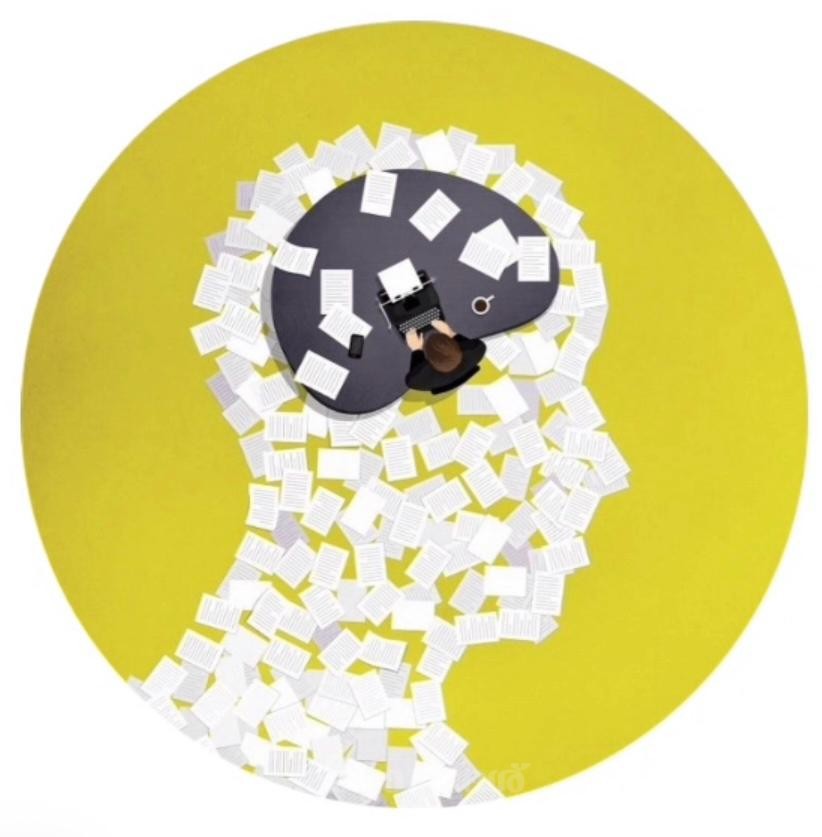
On the surface, human beings appear rational. We compare options, weigh outcomes and take pride in calling ourselves “thinking” creatures. Yet, even the most intelligent among us often make choices that, in hindsight, seem puzzling. Why does a seasoned investor fall for a bad deal? Why does a well-informed citizen believe a rumour more readily than statistics? Why does a doctor hesitate on a treatment decision even with clear data in front of him?
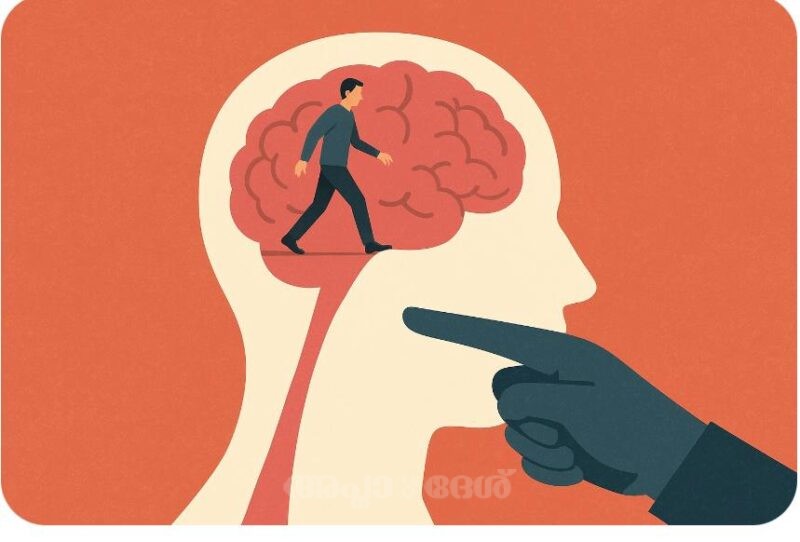
The truth is quieter and more unsettling: we do not always decide with logic—we decide with perception. And perception, as psychology repeatedly shows, is a slippery guide.
The General’s Dilemma: A Lesson in Framing
Consider a classic scenario studied by psychologists Daniel Kahneman and Amos Tversky. A General must choose between two escape routes for his soldiers. If he chooses the first, 200 lives will be saved. If he chooses the second, there is a one-third chance that all will survive and a two-thirds chance that 600 will die. Most people choose the first—it feels safer, more certain.
Now, frame the same situation differently: The first route will cost 400 lives, and the second carries the same gamble as before. Suddenly, more people choose the second option.
Nothing changed except the wording. What was earlier seen as a gain suddenly became a loss. We do not respond to reality—we respond to how reality is told to us.
The Mind’s Shortcuts: Useful, but Misleading
Our brain is efficient, but this efficiency comes at a cost. Instead of calculating probabilities, we rely on quick mental shortcuts.
• Availability bias leads us to believe that plane crashes are more common than blood pressure strokes—simply because the crash makes news, while the stroke remains quietly statistical.
• Representativeness bias makes us assume that a confident speaker must be right, or that a person who “looks like a leader” will make better decisions—even if data suggests otherwise.
• Loss aversion, perhaps the most human of all tendencies, ensures that the pain of losing ₹1000 feels far greater than the joy of gaining ₹1000. We will go to great lengths to avoid a loss, even at the cost of a rational gain. We trust our intuition, forgetting that intuition itself is shaped by past impressions, fears and half-remembered experiences.
Mental Accounts and Everyday Errors
Here is a common experience: You buy a theatre ticket for 100 and misplace it. Most people refuse to buy another one. But if you lose a 100 note on the way and still have to buy a ticket, you go ahead. Rationally, both situations are identical—you are 100 short either way. Yet in our minds, we have opened a mental account: “Ticket already paid”. A fresh purchase now feels like a waste, even though the loss is the same.
These invisible psychological accounts govern far more serious decisions—in finance, in politics, even in matters of health and relationships.
In the Age of Digital Choices
Today, we live in a world where choices are no longer made in solitude. Algorithms gently nudge us, recommending what to watch, what to buy, even whom to trust. Artificial Intelligence does not eliminate human bias; it often reflects it. If we are not aware of our mental traps, machines trained on our behaviour risk amplifying them.
Kahneman ( Noble prize Winner) once remarked that being aware of biases does not automatically make us free of them. But awareness gives us something precious: the brief pause between thought and action—the moment where wisdom lives.
The Gentle Art of Pausing
We cannot remove all biases, nor can we remain in constant rational calculation. That is not how humans are built. But we can learn to slow down when it matters. To ask: “Am I reacting to facts, or to the way those facts were framed?” “Am I choosing safety, or simply fearing loss?” “Is this my decision, or one nudged by habit and familiarity?”
In an era of speed, the pause is the most underrated decision tool. And perhaps, wisdom begins there.
End note: The brain remains a mystery to us. How can a three pound mass of jelly that we can hold in our palm imagine Angels,contemplate the meaning of Infinity, and even question its own place in the cosmos ? ( from the Book of V. S . Ramachandran: “The Tell-Tale Brain”.)